It is almost impossible to overlook the technological advances that the automotive world has accomplished in recent decades, in order to provide the solutions to day-to-day problems we as a convenience hungry species have so strongly demanded. With thanks to a range of manufacturers many of us can feel like Knight Rider did talking to KITT (although I don’t remember David Hasselhoff using KITT’s voice recognition abilities to text his mother to say he’ll be home in time for dinner). From its initial conception by Karl Benz in 1886, to provide a more efficient method of transport than the fabled horse and carriage, the car as we know it has been consistently evolving in order to take us to even further destinations, in even shorter time.
However, amongst the greatly accepted evolvements such as hands-free technology, parking sensors and even the possibility of full automation, public engagement with electric-powered cars, although rising, is still encountering mixed reviews. In recent polls, some 80% of the British public are now “fairly” or “very” concerned about climate change[1] however only one in four people would consider buying a fully electric car in the next five years.[2] Therefore, are statistics such as these showing us that the electric car is not the desired answer to our need for reduced emissions and increased sustainability, or is it just that the technology is simply not ready yet?
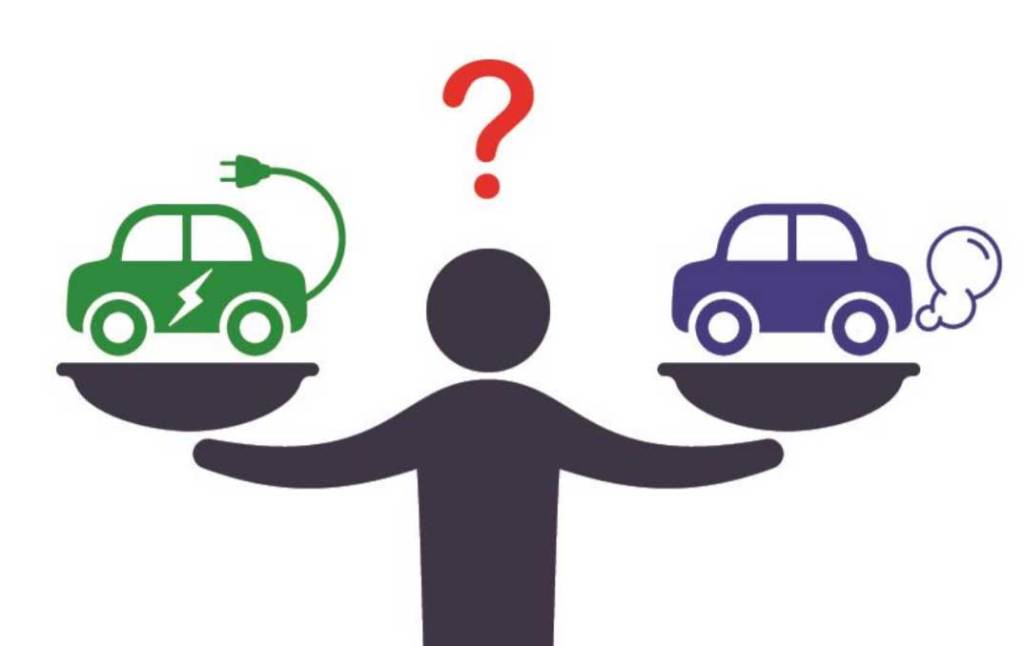
The UK government, along with many others, are legally bound to have reduced CO2 emissions by 80% in 2050.[2] Transport in the UK is the highest greenhouse gas emitting sector, producing over 120 million tonnes of CO2 in 2018,[3] and as the most widely used mode of transport, reducing vehicle emissions is seen as a critical part of the reduction of climate change-causing pollution in this country. Indeed, the UK’s current policy is to only allow the sale of zero emissions capable new cars and vans by 2040.[4] You would therefore like to believe that the electric car would be a widely accepted replacement for its fossil fuel-hungry counterpart, right? Wrong. The truth is, there are many desirable factors that, until the electric car came along, we as a nation have taken for granted when it comes to petrol- or diesel-powered transport.
The first, and potentially most important of these factors is the amount of charging points. When was the last time you decided to not leave the house in your car, because you were worried that you might not be able to find a petrol station on your route to refill the tank? Probably never. Well that’s the case in present-day Wales when driving an electric car; the nation as a whole only has four more rapid charging points than the town of Milton Keynes.[5] This off-putting factor is closely linked to another, “range anxiety” (the fear that your electric car will not live up to its displayed range capabilities). This is an increasingly pressing issue, as the range of an electric car is one of the most limiting factors for consumers, analysis revealing that a range of 200 miles was needed for 50% of participants in a Transport Research Laboratory study to consider even owning a fully electric car.[2] The third barrier to electric vehicle take-up in research by the RAC[5] is high upfront vehicle costs. This is a factor that isn’t helped by the fact that the government have decided to cut the incentive discounts on new all-electric cars from £4,500 to £3,500[2] a move which has been condemned by many motoring groups. Inherently due to their relatively short life so far, the amount of second-hand electric cars that are available to buy is miniscule in comparison to the plethora of conventional second-hand vehicles on the market. As such, even if the UK government enforce and achieve their goal of all new cars and vans to be zero emissions capable in 2040, the sheer number of already owned and second-hand fossil fuel powered cars will very likely massively outweigh the number of new zero emissions cars bought each year.
So, what are all these societal factors telling the industry and most notably the science behind the industry, about our engagement with electric vehicles? The crux of it is that the wider society need to be installed with the confidence to go electric, which will not occur until the right incentives are given and the technology and charging infrastructure is well established and tested. Manufacturers need to realise that the creation of electric vehicles in order to combat the leading producer of climate change-causing emissions is not as linear as expected. Scepticism is embedded in our modern-day culture and this new technology will never be widely accepted until it is tried and tested.
The industry must therefore work with the consumers, listening to the needs of the people that will use the technology on a day-to-day basis, and provide the right response in terms of increasing public engagement with this new way of living in order to reduce our emissions and become a more sustainable nation.
References
[1] Barasi, L. (2020) Guest post: Polls reveal surge in concern in UK about climate change [Internet]. Carbon Brief [cited 14 February 2020]. Available from: https://www.carbonbrief.org/guest-post-rolls-reveal-surge-in-concern-in-uk-about-climate-change
[2] Browning, S. (2019) Electric cars not attractive for most people in the UK [Internet]. BBC News [cited 14 February 2020]. Available from: https://www.bbc.co.uk/news/business-48340202
[3] Department for Business, Energy & Industrial Strategy. (2019) 2018 UK Greenhouse Gas Emissions, Provisional Figures, National Statistics.
[4] Harrabin, R. (2020) Climate change: Electric car target ‘needs to be sooner’ [Internet]. BBC News [cited 14 February 2020]. Available from: https://www.bbc.co.uk/news/science-environment-48097150
[5] Stanton, A. (2020) Lack of electric car charging points ‘putting off’ drivers [Internet]. BBC News [cited 14 February 2020]. Available from: https://www.bbc.co.uk/news/uk-47696839
[6] Schwoerer, P. (2018) Selon l’UFC-Que Choisir, la voiture électrique est moins chère que le diesel et l’essence [Internet]. Automobile Propre. 2020 [cited 17 February 2020]. Available from: https://www.automobile-propre.com/ufc-que-choisir-voitures-electriques-moins-cheres-diesel-essence/comment-page-3/

 TECHNOLOGY R-EV-IEW